
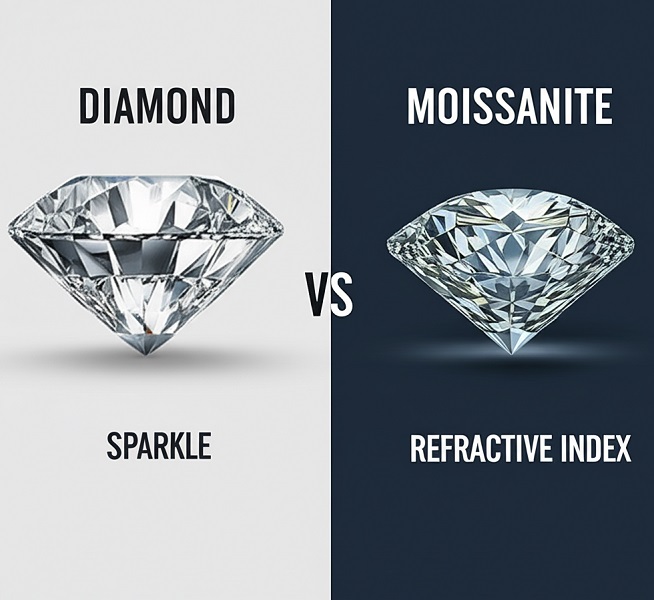
When it comes to choosing the perfect stone for your engagement ring, the debate between diamond vs moissanite is more relevant than ever. As couples seek beautiful, budget-friendly, and ethical options, moissanite engagement rings are becoming a popular alternative to traditional diamonds. But how do these two gemstones really compare?
In this guide, we’ll break down the key differences in brilliance, durability, cost, and ethics to help you decide: Should I buy moissanite or diamond?
What Is Moissanite?
Moissanite is a gemstone composed of silicon carbide. Originally discovered in a meteor crater, the moissanite used in jewelry today is lab-created, making it a more sustainable and ethical choice. Its dazzling sparkle and affordability have made it a top diamond alternative.
Diamond vs Moissanite: Key Comparisons
1. Brilliance and Sparkle
- Diamonds have a classic, white sparkle due to their unique refractive index (2.42). Their brilliance is more subtle and elegant.
- Moissanite actually has a higher refractive index (2.65–2.69), giving it a fiery, rainbow-like sparkle. Some love this effect, while others prefer the understated glow of a diamond.
2. Durability and Hardness
- Diamonds score a 10 on the Mohs scale, making them the hardest natural material on Earth—ideal for everyday wear.
- Moissanite scores 9.25, which is still extremely durable and resistant to scratching. It’s a solid option for engagement rings that will be worn daily.
3. Color and Clarity
- Diamonds are graded on a scale from D (colorless) to Z (light yellow). High-quality diamonds are prized for their icy clarity.
- Moissanite typically appears near-colorless but may have a slight yellow or gray tint in certain lighting. However, premium moissanite stones are nearly indistinguishable from diamonds to the untrained eye.
4. Cost Comparison
- Diamonds are significantly more expensive due to their rarity and the cost of mining and certification.
- Moissanite offers substantial savings—often 80–90% less than diamonds of comparable size and appearance—without sacrificing beauty.
5. Ethics and Sustainability
- Natural diamonds may be associated with environmental concerns and conflict regions (though lab-grown diamonds are now a more ethical option).
- Moissanite, being lab-created, has a lower environmental impact and is considered a 100% conflict-free gemstone.
Pros and Cons
Diamond Pros:
- Timeless elegance and tradition
- Superior hardness
- High resale value
Diamond Cons:
- Expensive
- Ethical concerns (if not lab-grown)
- Less sparkle compared to moissanite
Moissanite Pros:
- Affordable
- Brilliant fire and sparkle
- Ethical and eco-friendly
Moissanite Cons:
- Can appear overly sparkly to some
- Slight color tint in larger stones
- Lower resale value
So, Should I Buy Moissanite or Diamond?
The answer depends on your priorities. If you’re seeking a traditional, investment-worthy stone with timeless prestige, a diamond may be the better choice. However, if you value cost-efficiency, ethical sourcing, and eye-catching brilliance, moissanite engagement rings are an excellent alternative.
Final Thoughts
Whether you’re captivated by the classic allure of diamonds or intrigued by the dazzling appeal of moissanite, both options offer something beautiful and unique. By weighing the pros and cons of diamond vs moissanite, you can confidently choose the gemstone that reflects your values, budget, and style.